Thread Lift vs Facelift: An Honest Comparison by Toronto Nurses

You've been researching options for sagging skin along your jawline and neck, and two terms keep coming up: thread lift and facelift surgery. You're not sure if a less invasive option can actually compete with surgery, or if you'd just be spending money on something temporary.
Here's the honest answer: thread lift and facelift surgery are not interchangeable. Thread lift is a temporary, non-surgical option best suited for mild to moderate laxity, while facelift surgery addresses more advanced sagging with longer-lasting results. This article will help you understand which approach actually fits your degree of skin laxity, your downtime tolerance, and your expectations.
Table of Contents
ToggleQuick Answer: Thread Lift vs Facelift
-
Thread lift is non-surgical, uses dissolvable sutures, and suits mild to moderate sagging.
-
Facelift surgery is invasive, removes excess skin, and suits moderate to significant sagging.
-
Thread lift results typically last 12 to 18 months; facelift results can last 7 to 10 years or more.
-
Thread lift recovery is days; facelift recovery is weeks.
-
Neither replaces the other — they serve different stages of facial ageing.
What We Actually See at Lux Beauty Skin
At Lux Beauty Skin, most people asking about thread lift versus facelift surgery are in their late 30s to early 50s, and many are trying to avoid surgery for as long as reasonably possible. We see a wide range of skin laxity in this age group, and not everyone is a good candidate for thread lift just because they'd prefer the non-surgical route.
Our approach is to assess the actual quality and volume of skin laxity before recommending anything. Some patients get a genuinely proportionate, natural-looking lift from thread lift Toronto treatments. Others have skin laxity advanced enough that thread lift would give a subtle, short-lived result and not match their expectations. We're upfront about this distinction rather than selling thread lift as a facelift replacement when it isn't one.
Reference Table: Thread Lift vs Facelift Surgery
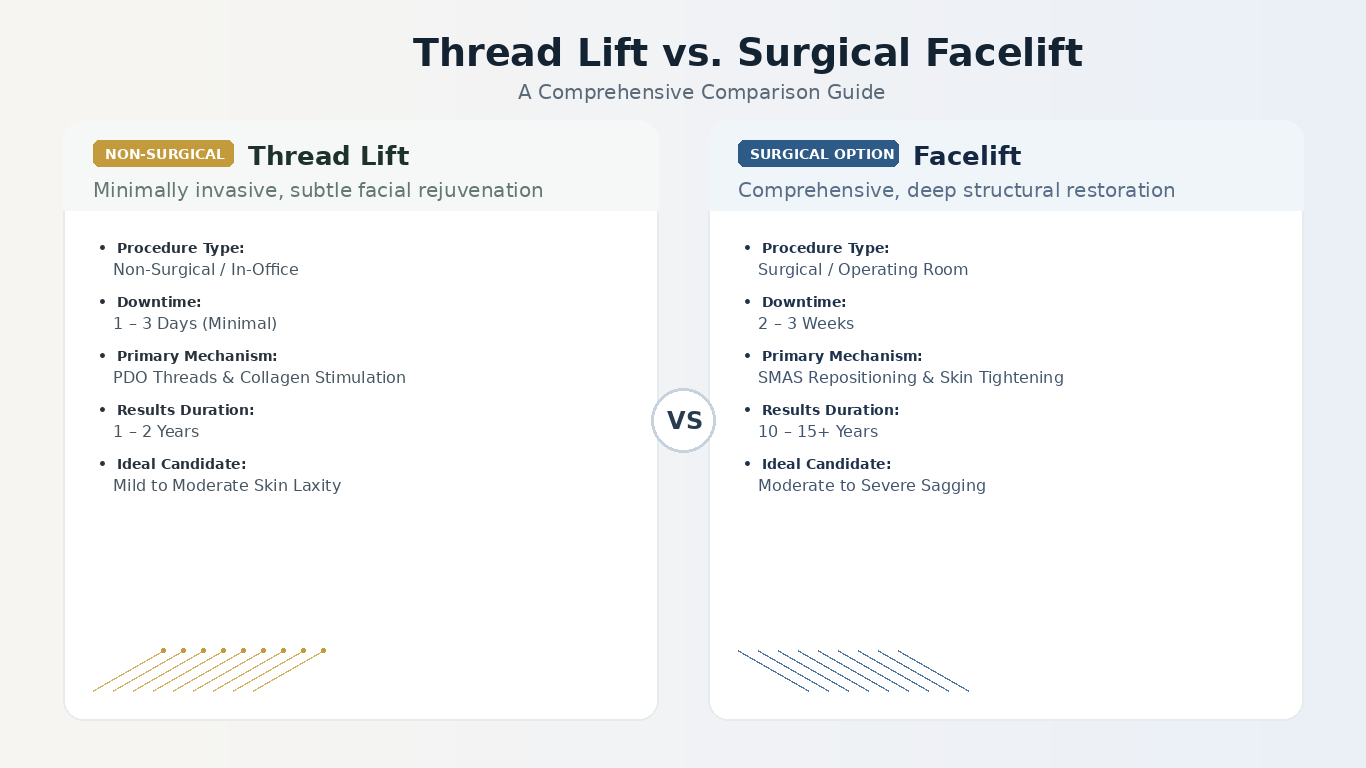
| Factor | Thread Lift | Facelift Surgery |
|---|---|---|
| Invasiveness | Non-surgical, in-office | Surgical, operating room |
| Best for | Mild to moderate laxity | Moderate to significant laxity |
| Downtime | 3–7 days | 2–4 weeks |
| Results last | 12–18 months | 7–10+ years |
| Anesthesia | Local | General or sedation |
| Cost pattern | Lower per session, repeated | Higher upfront, one-time |
| Reversibility | Threads dissolve naturally | Permanent surgical change |
What Does a Thread Lift Actually Do?
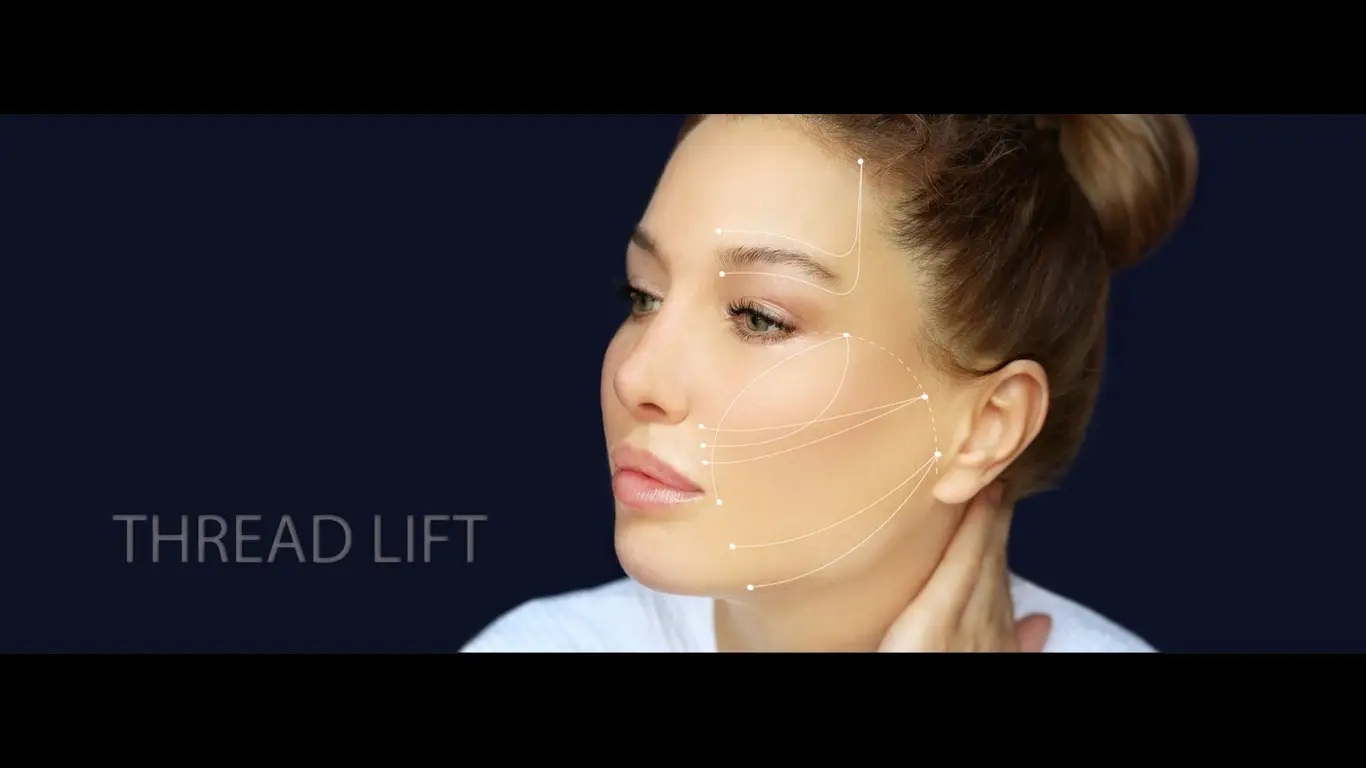
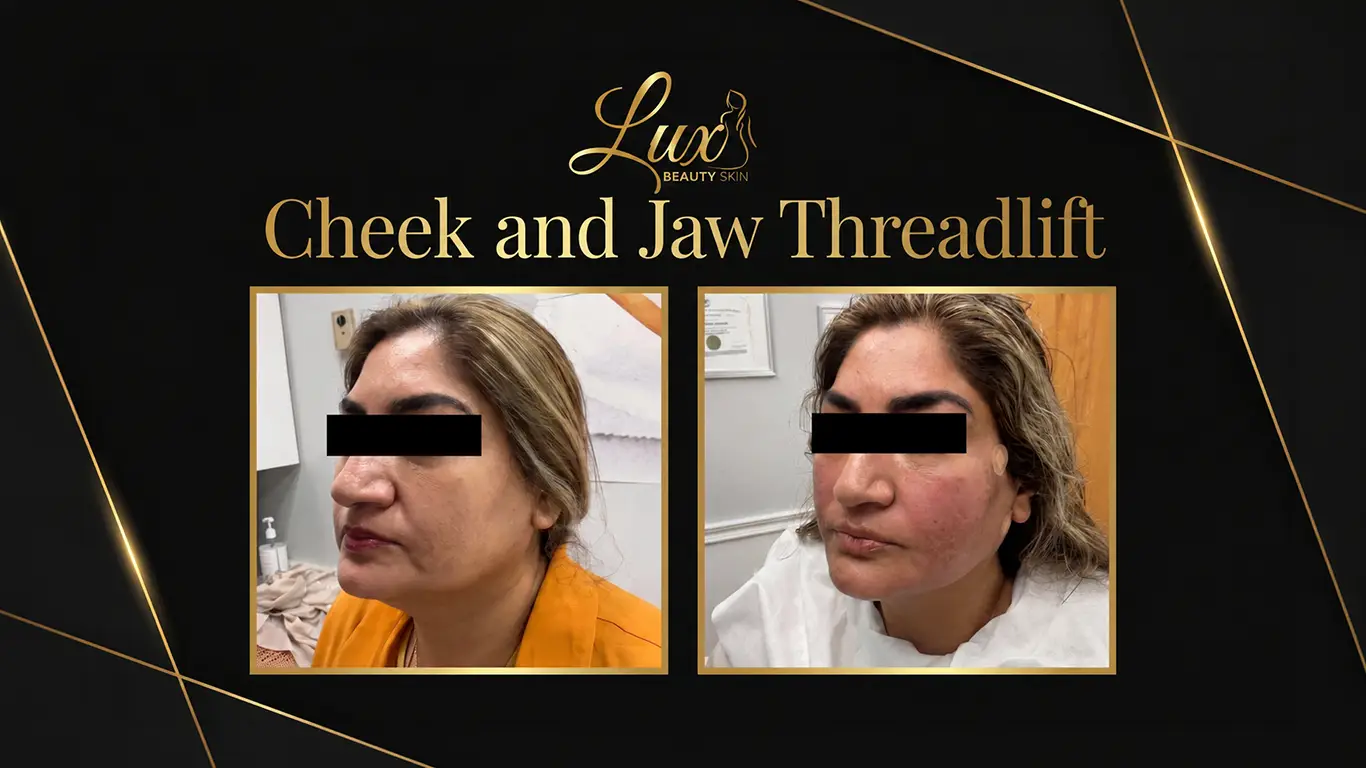
A thread lift uses dissolvable, barbed sutures inserted under the skin to create a subtle lifting effect along the jawline, cheeks, or neck. The threads also stimulate some collagen production as they dissolve over several months.
It's a mechanical, temporary lift rather than a removal of excess tissue. This is why thread lift results tend to look natural but modest compared to surgery — the technique is designed to reposition, not to fully correct significant sagging.
What Does Facelift Surgery Actually Do?
Facelift surgery involves incisions, usually near the hairline and ears, to lift and reposition deeper facial tissue, then remove excess skin. It's performed under sedation or general anesthesia by a plastic surgeon, not in a med spa setting.
Because it removes tissue rather than repositioning it non-surgically, facelift surgery can address jowls, deep nasolabial folds, and significant neck laxity more thoroughly than thread lift can.
Thread Lift vs Facelift: Which One Actually Works?
Both work, but for different starting points. Thread lift works well when skin laxity is mild to moderate and the main concern is a subtle sagging or loss of definition along the jaw. It does not work as well when skin has significant excess or deep folds, because there's simply more tissue than a thread can reposition.
Facelift surgery works more predictably for moderate to advanced laxity, but it comes with surgical risk, cost, and recovery that many people aren't ready for at an earlier stage. Choosing between them isn't about which is "better" — it's about matching the treatment to your actual anatomy.
Is Thread Lift as Good as a Facelift?
Not in scope, but that doesn't mean it's not worthwhile. Thread lift is not designed to replace facelift-level correction. If you have advanced jowling or loose neck skin, thread lift will likely underdeliver compared to your expectations.
Where thread lift performs well is in the "in-between" stage — after fillers and skin treatments aren't quite enough, but before your laxity is advanced enough to justify surgery. For that specific window, thread lift can be a reasonable, honest option.
How Long Do Thread Lifts Really Last?
Most patients see effects for around 12 to 18 months, though this varies with skin quality, age, and how much collagen response occurs as the threads dissolve. Some people notice a gradual softening of the lift starting around month 9 to 12.
This is meaningfully shorter than facelift surgery, which is why some patients choose to repeat thread lift periodically rather than committing to surgery. It's a maintenance-style option, not a one-time fix.
Thread Lift Recovery: What to Expect Week by Week
Days 1–3: Mild swelling, tightness, and some bruising near insertion points are common. Most people can return to light activity within a day or two.
Days 4–7: Swelling and tenderness typically ease. Some patients feel occasional pulling sensations as the threads settle, which is expected.
Weeks 2–4: Final positioning becomes more apparent as swelling fully resolves. Any residual tightness usually resolves by this point.
Months 1–3: Collagen stimulation from the dissolving threads continues, which is part of why results can look better a few months after treatment than right after.
This is a far shorter recovery than facelift surgery, where swelling and bruising can last several weeks and full results take months to settle.
What About Non-Surgical Facelift Alternatives Beyond Thread Lift?
Thread lift isn't the only non-surgical facelift alternative. Depending on your skin quality and goals, options like Sculptra (for gradual collagen stimulation) or dermal fillers (for volume loss) may be used alongside or instead of thread lift.
Thread Lift vs Sculptra: Different Jobs, Sometimes Combined
Thread lift addresses positioning — lifting sagging tissue. Sculptra addresses volume and collagen stimulation over time, rather than repositioning tissue. Some patients benefit from combining both: Sculptra to rebuild volume and thread lift to reposition, though this should be planned carefully rather than done reflexively.
Signs Thread Lift Timing Is Right for You
-
Your jawline or cheeks have started to look less defined, but skin isn't visibly loose or folded.
-
You want a non-surgical option and can accept results lasting 12–18 months rather than years.
-
You've already tried fillers or skincare and want a bit more lift without surgery.
-
You're comfortable with a few days of downtime, not weeks.
Signs You Should Consider Facelift Surgery Instead
-
You have visible jowling, excess neck skin, or deep folds that don't respond to non-surgical options.
-
You want results that last many years, not months.
-
You're prepared for a longer recovery and a surgical consultation with a plastic surgeon.
-
Previous non-surgical treatments have given diminishing or unsatisfying results.
What a Qualified Provider Assesses Before Recommending Either
A qualified nurse injector or provider will assess your skin laxity, tissue quality, facial fat distribution, and how your face moves and ages, not just your chronological age. They should also discuss your downtime tolerance and long-term goals honestly, including telling you if thread lift isn't likely to meet your expectations.
Safety, Limits, and Who Shouldn't Get a Thread Lift
Thread lift is generally well-tolerated, but it isn't right for everyone. It's not recommended for very thin skin, significant existing laxity, active skin infections, or certain autoimmune conditions affecting healing. Temporary risks include bruising, asymmetry, or a thread becoming palpable under the skin, which usually resolves as swelling settles.
Facelift surgery Toronto carries standard surgical risks, including anesthesia risk, infection, and longer recovery, and should only be performed by a licensed plastic surgeon. Thread lift, by contrast, should be performed by a trained, qualified nurse injector or physician-led provider familiar with facial anatomy and Health Canada–approved thread devices.
Cost Planning: Thread Lift vs Facelift Surgery
Thread lift is typically priced per number of threads used and treatment area, making it a lower upfront cost than facelift surgery, though it's repeated every 12–18 months if you want to maintain results. Facelift surgery has a much higher one-time cost that includes surgical fees, anesthesia, and facility costs, but doesn't require the same repeat investment for years.
The right choice isn't about which costs less overall — it's about your laxity, timeline, and how you value avoiding surgery now versus a longer-lasting result later. A consultation can help map out realistic cost expectations based on your specific case rather than a generic price list.
FAQs
Yes. Thread lift doesn’t limit your future options. Since the threads dissolve naturally within a year or so, having a thread lift now doesn’t prevent facelift surgery later if your laxity progresses or your goals change. Many patients use thread lift as a way to delay surgery, then transition to a facelift once non-surgical options no longer meet their needs. Your surgeon would simply need to know your treatment history during a surgical consultation.
When done conservatively by a trained provider, thread lift is designed to create a subtle, natural-looking lift rather than an overly tight appearance. Overcorrection is more likely when too many threads are used or placement doesn’t match your natural anatomy. This is why assessment matters — a good provider will recommend a lift that suits your face rather than the maximum number of threads possible.
There’s no fixed number. Some patients repeat thread lift every 12–18 months for years without ever needing surgery, especially if their laxity progresses slowly. Others find that after one or two thread lift sessions, their laxity has advanced enough that facelift surgery becomes the more sensible next step. This really depends on your skin’s ageing pattern, which a provider can help monitor over time.
Generally, no. Both thread lift and facelift surgery are considered cosmetic procedures in Canada and are not covered by provincial health insurance or most extended health plans, since they aren’t medically necessary. Some clinics offer financing options for facelift surgery given its higher upfront cost. Thread lift’s lower per-session cost makes financing less common, but you should confirm payment options directly with your provider or surgeon.
Because the threads are dissolvable, results are temporary by design. If you’re unhappy with the outcome, the effect will fade naturally over 12–18 months without requiring removal in most cases. This is different from facelift surgery, where results are permanent and any dissatisfaction would require a more involved surgical revision. This reversibility is one reason some patients prefer starting with thread lift.