Preventative Botox in Your 30s: Is It Worth It?

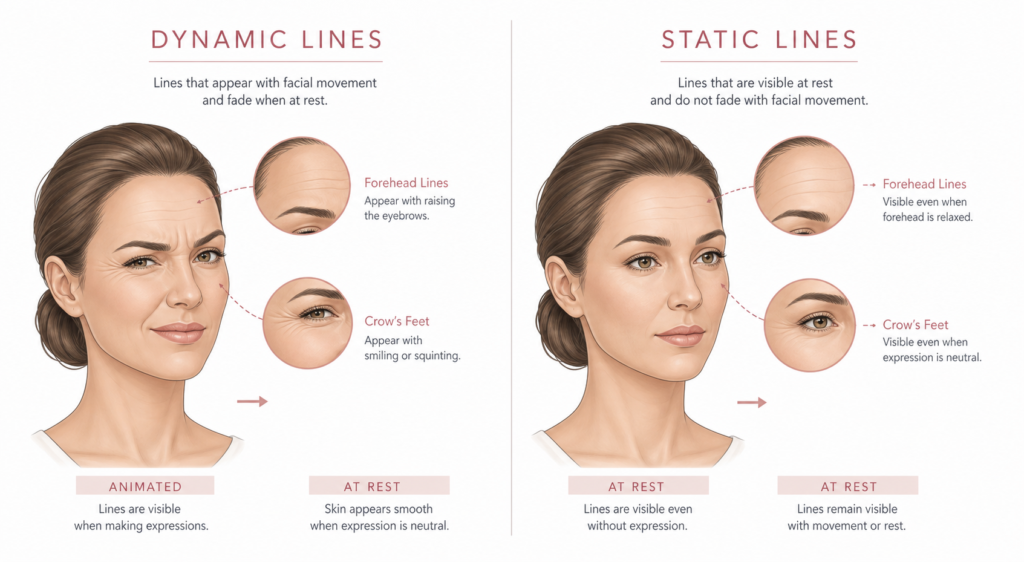
You’re starting to notice that your forehead lines stay a little longer after you raise your brows, or that crow’s feet show up in photos even when your face is relaxed. That is usually when people begin asking whether preventative Botox in your 30s is actually worth it.
The short answer is: for the right person, yes, it can be a reasonable way to slow the look of expression lines, but it is not necessary for everyone. This article will help you decide whether early wrinkle prevention makes sense for your face, what results to expect, and when to book a consultation instead of rushing into treatment.
Table of Contents
ToggleIs preventative Botox in your 30s worth it?
-
It may be worth it if expression lines are starting to linger.
-
It is more useful for movement-related lines than for static wrinkles.
-
It will not stop ageing, but it may help soften repeated creasing over time.
-
The right unit dose depends on your muscles, not your age.
-
A proper consultation matters more than starting early just because you are 30.
What We Actually See at Lux Beauty Skin
At Lux Beauty Skin, we usually see two groups of people in their 30s. One group already has visible forehead lines or crow’s feet when they animate. The other group is curious about preventative Botox because friends have started it, but they are not sure they actually need it.
Our approach is conservative. We are not trying to freeze expressions or push treatment on someone who only has very mild movement. We look at how your face moves at rest and in motion, then decide whether Botox, another toxin option, or simply observation makes more sense. For many patients, a small, targeted plan is more appropriate than treating multiple areas at once.
Decision Table
| Question | Practical answer |
|---|---|
| What does preventative Botox do? | It reduces repeated muscle movement that can deepen expression lines. |
| Who is it for? | People in their 30s with early forehead lines, crow’s feet, or strong expression patterns. |
| Is it permanent? | No. It is temporary and maintenance is usually needed. |
| Does it replace skincare? | No. It can complement sunscreen, retinoids, and good skin habits. |
| Is it worth it for everyone? | No. Some people can wait without losing much. |
What Is Preventative Botox?
Preventative Botox means using small, carefully planned doses of botulinum toxin before deep lines become fully etched in. The goal is not to erase every line. It is to reduce the repeated folding that can make Botox for fine lines more useful later on.
In your 30s, this is usually about expression areas such as the forehead and crow’s feet. It is less about treating age itself and more about managing how your muscles crease the skin over time.
Why People Start Botox in Their 30s
Most people do not start because they suddenly need it. They start because they notice one of three things: lines lingering after movement, makeup settling into creases, or photos showing more facial movement than they expected.
This is where early wrinkle prevention becomes a personal decision. If your lines disappear completely when your face is relaxed, you may not need much. If they stay visible even when you are not making an expression, treatment may be more reasonable.
Will Starting Botox at 30 Prevent Wrinkles Later?
It may help reduce the depth of some expression lines, but it does not guarantee wrinkle-free skin later. Ageing is influenced by genetics, sun exposure, sleep, stress, smoking, skincare, and facial anatomy, not just movement.
So the better question is not whether Botox “prevents” wrinkles forever. The better question is whether treating early movement lines now is worth it to you. For some patients, it is a useful way to slow progression. For others, it feels unnecessary at this stage.
Botox for Forehead Lines vs Crow’s Feet
These are the two areas most commonly discussed in preventative treatment. Forehead lines often show up first because people lift their brows often without realizing it. Crow’s feet tend to become more obvious when smiling, squinting, or spending time in strong sunlight.
A qualified injector will not treat these areas the same way in every patient. Some faces need very little in the forehead and more around the eyes. Others are better left alone except for a tiny touch-up, especially if the goal is to keep movement looking natural.
How Much Botox Should You Get as a Preventative in Your 30s?
There is no fixed number that applies to everyone. The dose depends on muscle strength, brow position, facial symmetry, and how much movement you want to keep.
That is why asking for a preset unit amount is usually less helpful than asking for a good assessment. Someone with stronger frontalis movement may need more than someone with softer expression patterns, even if they are the same age. The right plan should be built around your face, not a generic age-based chart.
How Often Should You Get Botox?
This depends on how fast your body metabolizes the product and how active the treated muscles are. Many people start noticing movement returning over a few months, but the exact timing varies.
If you are using Botox for prevention rather than correction, your injector may recommend smaller maintenance sessions rather than waiting until lines come all the way back. That said, over-treating too early can create an unnatural look or encourage people to chase a result that does not match their lifestyle.
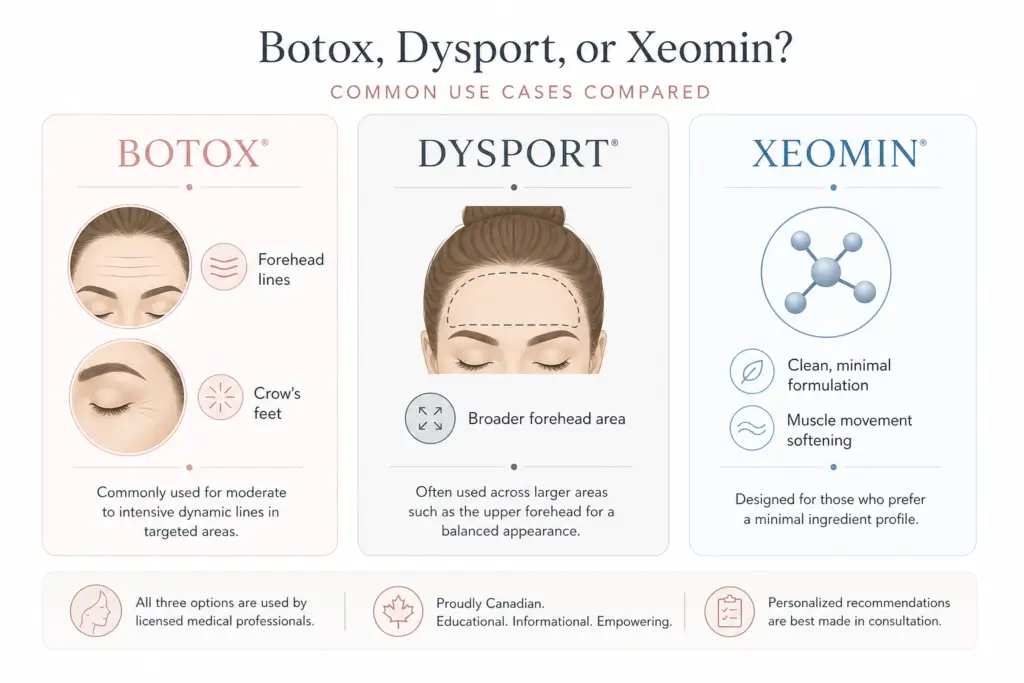
Botox vs Dysport vs Xeomin
For preventative treatment, the choice of product often depends on injector preference, your anatomy, and how your face responds to each option.
-
Botox is the most familiar to many patients and commonly used for forehead lines and crow’s feet.
-
Dysport may spread a bit more, which some injectors like for certain forehead patterns.
-
Xeomin is sometimes chosen for patients who want a more “naked” formulation without some accessory proteins.
The right product is not just about brand. It is about placement, dose, and the experience of the injector working with your face.
Signs This Timing Is Right for You
You may be a good candidate for Botox in your 30s if:
-
Your expression lines are starting to linger after your face relaxes.
-
You want a subtle approach, not a dramatic change.
-
You are bothered more by movement lines than by skin laxity.
-
You are comfortable with maintenance rather than a one-time fix.
-
You want a professional opinion before lines become harder to soften.
In these cases, a small preventative plan may be reasonable.
Signs You Should Wait
You may want to wait if:
-
Your lines only appear in strong animation and vanish completely at rest.
-
You are not ready for repeated maintenance.
-
You are mainly concerned about skin texture, not muscle movement.
-
You are hoping Botox will replace skincare, sleep, or sun protection.
-
You feel unsure and would only be booking because of pressure or trends.
Waiting does not mean missing your chance. It simply means the timing may not be right yet.
What a Qualified Injector Assesses
A good injector should look at more than just wrinkles. They should assess your facial movement, eyebrow position, skin quality, symmetry, and whether treatment could affect your expression in a way you would not like.
At a Canadian medical aesthetics clinic, treatment should be done by properly trained professionals in a safe, clinical setting. Botox, Dysport, and Xeomin are commonly used in medical aesthetics, but they still require careful dosing and judgment. That matters even more when the goal is prevention rather than correction.
Safety and Realistic Limits
Botox is widely used in medical aesthetics, but it is not risk-free. Temporary bruising, headache, swelling, or asymmetry can happen, and some patients simply do not like how they look with less movement.
It is also not the right choice for everyone, including people with certain neuromuscular conditions, active infection at the treatment site, or specific medical considerations that should be reviewed in consultation. A qualified injector should explain both the benefits and the limits clearly before treatment.
Pricing and Planning
If you are considering preventive treatment, cost planning should be based on the areas being treated and the number of units recommended, not just the idea of “starting Botox.”
At Lux Beauty Skin, our current summer offer includes Botox, Dysport, and Xeomin at $5 per unit, plus an additional 10% discount for treatments over 60 units. That said, the right number of units should still be determined by consultation, because a preventative plan in your 30s is often smaller and more tailored than a treatment for established lines.
When to Book
Book when you are genuinely noticing early lines and want an expert opinion before they deepen. That is the most useful time to discuss preventative treatment.
It is also a good time to book if you have an event, want to compare Botox with Dysport or Xeomin, or are looking for a measured plan rather than a heavy-handed one.
FAQs
It can be worth it if you are already seeing repeated expression lines and want to slow their deepening. For some people, a small amount of Botox early on helps reduce the creasing that becomes more obvious later. For others, especially if the lines disappear completely at rest, the benefit may be too small to justify starting. The real value depends on your face, your goals, and how you feel about maintenance.
Not necessarily. Some people continue because they like the look and consistency. Others use it seasonally or pause for long periods. Starting in your 30s does not lock you into permanent treatment. It simply means you may choose to manage movement lines earlier than you otherwise would. Whether you keep doing it should depend on how your face responds and whether the results still fit your preference.
For many people, the first areas are the forehead or crow’s feet, because those are common places where expression lines begin to show. That said, not everyone needs the same pattern. Some patients benefit from very small doses in only one area, while others should wait. A proper consult should focus on your natural facial movement rather than treating every wrinkle-prone area automatically.
They do different things. Skincare can support skin quality, hydration, and sun protection, while Botox reduces muscle-driven creasing. If the goal is early wrinkle prevention, Botox may help with expression lines, but it does not replace sunscreen, retinoids, or good daily care. In most cases, the strongest plan is a combination of both rather than choosing one or the other.
That depends on your anatomy, treatment goals, and injector preference. Botox is often chosen for standard forehead and crow’s feet treatment. Dysport may suit some forehead patterns, and Xeomin may appeal to people who want a different formulation profile. The brand matters less than the injector’s assessment and technique. A consultation should explain why one option is better for your face instead of pushing one product for everyone.