Sculptra Toronto: How Much Does It Cost and What Are You Really Paying For?


You’ve probably seen Sculptra mentioned as a “subtle, natural” way to restore volume—but when you try to find pricing in Toronto, it’s vague or inconsistent. The short answer: Sculptra typically costs between $700 and $1,200 per vial in Toronto, and most people need 2–4 vials over multiple sessions. Your total cost depends on how much collagen stimulation your face needs, not just the price per vial.
This article will help you understand what actually affects the cost, how to plan your treatment properly, and how to decide if Sculptra is worth it for your goals.
Table of Contents
ToggleQuick Answer: Sculptra Cost in Toronto
-
Average cost per vial: $700–$1,200
-
Typical treatment plan: 2–4 vials over 2–3 sessions
-
Total estimated cost: $1,800–$4,000+
-
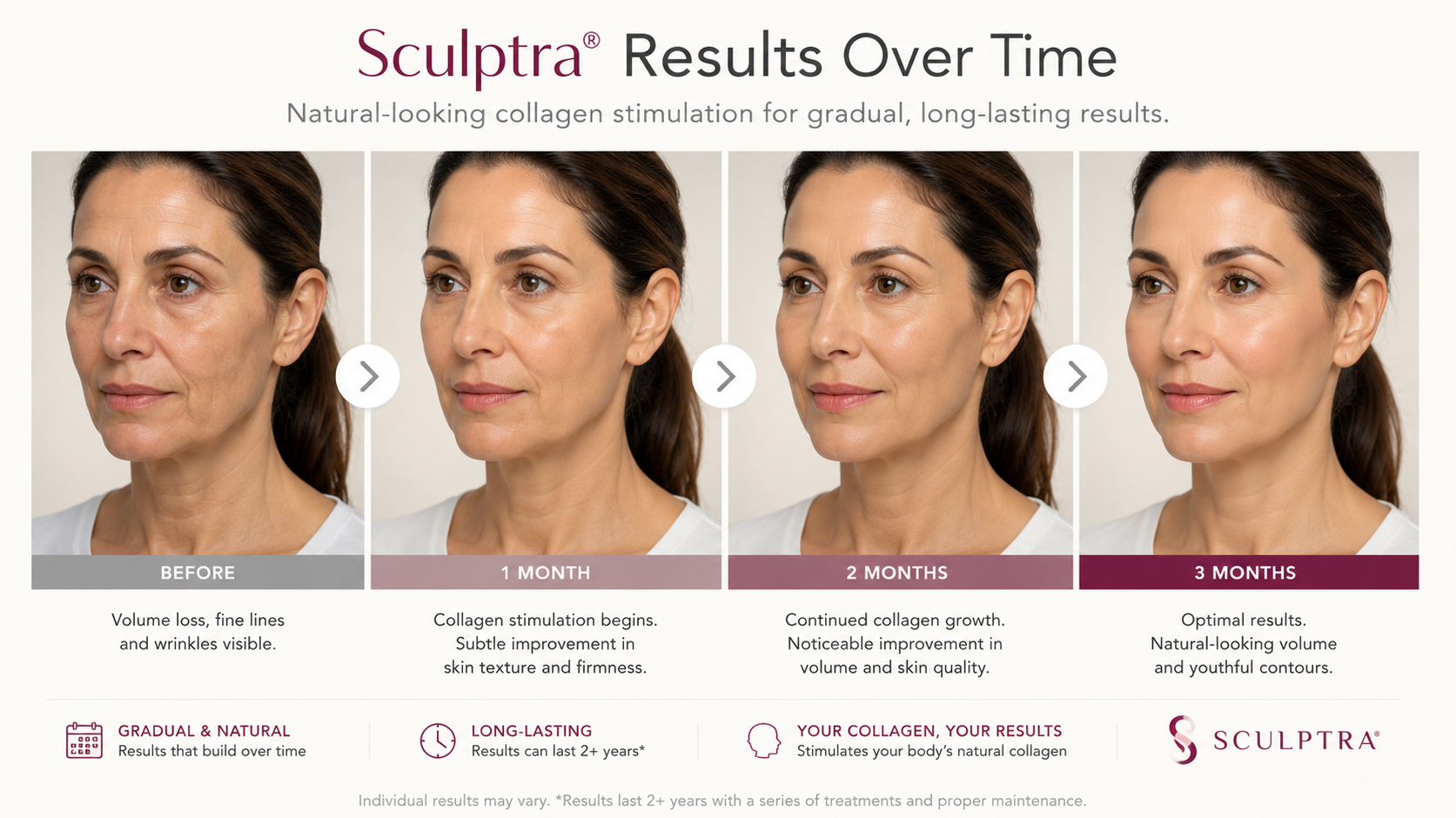
Results develop gradually over 8–16 weeks
-
Effects can last up to 2 years in many patients
Sculptra is priced per vial because it works by stimulating collagen, not instantly filling volume.
What Determines the Cost of Sculptra?
The biggest factor is how much volume loss you have.
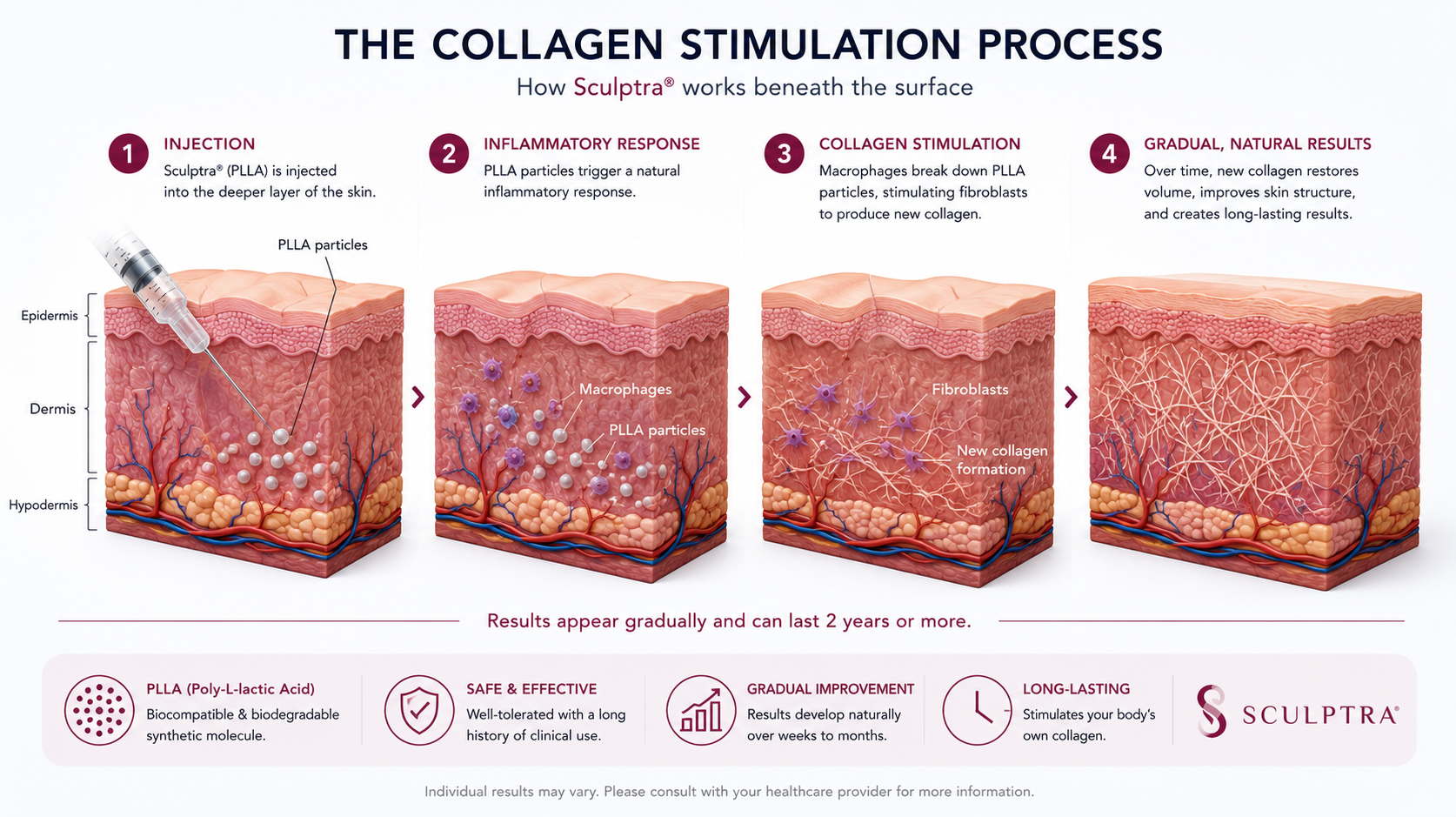
Sculptra is a collagen stimulator, so it rebuilds your own structure over time. That means pricing is based on how much product is needed to trigger that process effectively.
Other cost factors include:
-
Treatment area (full face vs temples vs cheeks)
-
Age-related collagen loss
-
Skin thickness and quality
-
Desired level of correction (subtle vs more noticeable)
-
Injector experience and clinic standards
Unlike hyaluronic acid fillers, you are not paying for instant volume—you are investing in gradual skin firmness and structure.
Why Sculptra Is Sold Per Vial (Not Per Area)
Each vial contains poly-L-lactic acid, which spreads under the skin and stimulates collagen over a wide area.
This is why:
-
One vial may treat multiple regions lightly
-
Or a single area deeply (like hollow cheeks)
-
There is no “flat rate per zone” like traditional fillers
A proper consultation determines how many vials your face actually needs for balanced, natural-looking results.
How Many Vials Do Most People Need?
A common guideline used in aesthetic medicine is:
-
One vial per decade of age (approximate starting point)
For example:
-
Early 30s: 2–3 vials total
-
40s: 3–4 vials
-
50+: 4+ vials
This is not a strict rule, but it helps explain why pricing varies widely between patients.
What We Actually See at Lux Beauty Skin
Most patients who come in asking about Sculptra in Toronto are not looking for dramatic change—they want to look less tired, less hollow, and more like themselves from a few years ago.
In practice:
-
Many first-time patients underestimate how gradual Sculptra is
-
Patients with early volume loss often need fewer vials but more patience
-
Those with deeper volume loss benefit from staged treatments
Our approach is conservative and layered.
We focus on restoring structure slowly so the outcome looks natural, not “treated.” Some patients combine Sculptra with other treatments depending on skin quality and movement patterns.
Is Sculptra More Expensive Than Fillers?
Upfront, yes—Sculptra can seem more expensive.
But over time, it may balance out or even become more cost-efficient.
Here’s why:
-
Hyaluronic acid fillers: last 6–12 months
-
Sculptra: can last up to 2 years
-
Sculptra treats overall volume loss, not just specific lines
If your goal is long-term skin firmness and gradual rejuvenation, Sculptra often requires fewer maintenance sessions.
Sculptra vs Botox: Cost and Purpose
These two are often compared, but they do completely different things.
-
Sculptra: rebuilds collagen to restore volume and structure
Cost-wise:
-
Botox is priced per unit and typically lower per session
-
Sculptra is priced per vial and involves a higher initial investment
Many patients benefit from combining both, especially when addressing both fine lines and volume loss.
Why Cheaper Sculptra Isn’t Always Better
If you see unusually low pricing, it’s worth asking questions.
Sculptra requires:
-
Proper dilution and preparation
-
Correct injection depth and technique
-
Strategic placement over multiple sessions
Poor technique can lead to:
-
Uneven results
-
Nodules under the skin
-
Under-correction or wasted product
In Canada, treatments should be performed by a qualified injector (RN or physician-led clinic) using Health Canada–approved products.
When Sculptra Is Worth the Investment?
Sculptra tends to be a good fit if:
-
You are noticing gradual volume loss
-
You want a non surgical face lift approach
-
You prefer subtle, progressive changes
-
You are comfortable waiting for results
-
You want longer-lasting outcomes
It is especially helpful for:
-
Hollow cheeks
-
Temples
-
Jawline softening
-
Early facial sagging
When You May Want to Wait
Sculptra is not always the first step.
You may want to delay if:
-
You want immediate results for an event
-
Your main concern is fine lines only
-
You are unsure about committing to multiple sessions
-
You prefer reversible treatments
In those cases, hyaluronic acid fillers or neuromodulators may be more appropriate initially.
What a Qualified Injector Assesses Before Pricing
A proper consultation goes beyond quoting a number.
At a clinical level, your provider evaluates:
-
Facial structure and symmetry
-
Degree of collagen loss
-
Skin quality and elasticity
-
Movement patterns (dynamic vs static aging)
-
Long-term treatment planning
This is why accurate pricing can’t be given without an in-person assessment.
What Is the 5-5-5 Rule and Does It Affect Results?
After Sculptra injections, patients are typically advised to follow the 5-5-5 rule:
-
Massage treated areas
-
5 minutes
-
5 times per day
-
For 5 days
This helps distribute the product evenly and reduce the risk of nodules.
It does not change the cost—but it does influence how smooth and consistent your results will be.
Reference Table: Sculptra Cost and Planning
| Factor | What It Means |
|---|---|
| Cost per vial | $700–$1,200 in Toronto |
| Total vials needed | 2–4+ depending on volume loss |
| Sessions required | 2–3 sessions spaced weeks apart |
| Results timeline | 8–16 weeks gradual improvement |
| Longevity | Up to 2 years in many patients |
| Best for | Volume loss, skin firmness, subtle lift |
Safety and Medical Considerations
Sculptra is Health Canada–approved and widely used when administered correctly.
However, it is not risk-free.
Possible side effects include:
-
Swelling or bruising
-
Temporary lumps under the skin
-
Rare delayed nodules
It may not be suitable if you:
-
Have certain autoimmune conditions
-
Are prone to keloid scarring
-
Have active skin infections
Choosing an experienced medical injector significantly reduces risks.
FAQ
One session typically ranges from $700 to $2,400 depending on how many vials are used during that visit. Some patients only need one vial per session, while others may require two or more for adequate collagen stimulation. Because Sculptra is usually done in a series, it’s more accurate to think in terms of total treatment cost rather than per-session pricing.
Sculptra works by gradually stimulating collagen production, not by instantly filling volume. Spacing treatments allows your body to respond and build structure over time. This layered approach leads to more natural-looking results and reduces the risk of overcorrection. Most treatment plans include 2–3 sessions spaced several weeks apart.
It can be, depending on your goals. While the upfront cost is higher than many fillers, Sculptra results tend to last longer—often up to two years. Patients who would otherwise need frequent filler touch-ups may find Sculptra more cost-effective over time, especially for full-face volume restoration.
Yes, and it’s common. Sculptra is often combined with Botox or other wrinkle relaxers to address both volume loss and dynamic lines. Some patients also use targeted fillers for specific areas while relying on Sculptra for overall structure. A consultation helps determine the right combination based on your facial anatomy.
There is no universal number. A provider will assess your facial volume loss, skin condition, and desired outcome. While age-based estimates exist, they are only rough guidelines. The most accurate way to determine this is through an in-person consultation with a qualified injector who can create a personalized treatment plan.