How Often Should You Get Botox? A Realistic Timing Guide


If you are thinking about Botox in Toronto or Richmond Hill, you are probably not wondering what it is—you want to know how often you will actually need to come in.
Most clients hear “every three months” without anyone explaining whether that is a rule, a rough guideline, or even necessary in their case.
For most people, Botox treatments are repeated about every 3–4 months, but your ideal schedule depends on your muscles, your goals, and how your body responds.
This article will help you decide how often should you get botox in a way that fits your face, lifestyle, and budget—not someone else’s routine.
Table of Contents
ToggleHow Often Should You Get Botox?
Typical range: every 3–4 months for most cosmetic patients.
Minimum spacing: not more often than about every 2–3 months in the same area to stay within safe guidelines.
First‑timers: start with one treatment, review at 2 weeks, then reassess around 3 months.
Long‑term users: some can gradually stretch to 4–6 months between visits once muscles “learn” to relax.
If in doubt: book when you see movement and lines returning and it bothers you—not just because the calendar says so.
What We Actually See at Lux Beauty Skin
At Lux Beauty Skin, most clients naturally settle into a schedule of Botox every 3–4 months after their first one or two visits.
That pattern seems to keep expression lines under control while still allowing plenty of natural movement for speaking, laughing, and everyday life.
We see a lot of variation, especially with forehead and frown lines.
Some highly expressive clients prefer to come in closer to three months because they notice lines early, while others are more relaxed and come when they feel “a bit too much movement” again.
Our philosophy is to aim for natural‑looking results and steady improvement over time, not to keep you in the chair more often than you need.
We adjust your timing based on how your muscles respond, how long it actually lasts in your case, and how smooth versus how expressive you want to be.
Reference Table: Typical Botox Timing at a Glance
| Scenario | Common Timing Pattern |
|---|---|
| First‑time Botox | Treat once, review at 2 weeks; reassess around 3 months |
| Regular cosmetic maintenance (most areas) | Every 3–4 months |
| Strong forehead or frown lines | Closer to every 3 months initially |
| Jawline / masseter slimming | Often 4–6 months once stable |
| Long‑term repeat users | Sometimes extend to 4–6 months with trained muscles |
| Minimum spacing for safety | No more often than every 2–3 months in same area |
How Does Botox Wear Off Over Time?
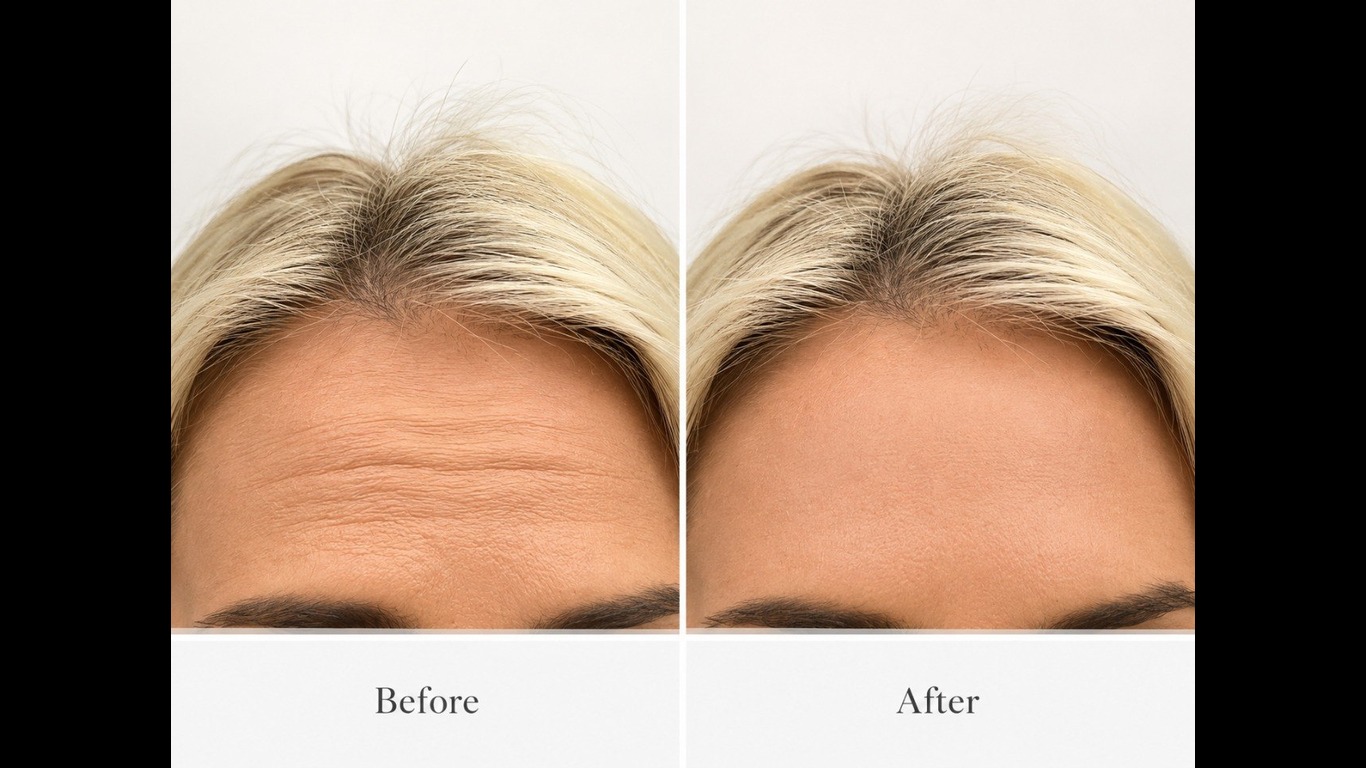
Once injected, Botox starts to work over several days by blocking the nerve signals that tell specific muscles to contract.
You usually see the full effect around two weeks, and then your body slowly begins to rebuild those nerve connections.
As that happens, movement gradually returns.
You do not go from frozen to full movement overnight; instead, you notice subtle changes—your brows lift a bit more, your frown lines start to appear with strong expression, and crow’s feet become visible again when you smile.
Health Canada notes that cosmetic Botox generally lasts about three to four months, which lines up with what most clinical sources and real‑world practice in Toronto see.
Your own “wear‑off” pattern after the first one or two treatments is one of the best indicators of how often you will realistically want to return.
How Often Should You Get Botox Injections for the Forehead?
Forehead lines come from repeated lifting of the brows, so timing depends on how expressive you are and how strong your frontalis muscle is.
Clients who raise their brows a lot, talk with big expressions, or naturally have higher-set brows often notice movement returning sooner.
For these clients, how often to get botox for forehead usually starts at around every three months, then sometimes stretches toward four once we understand their response.
If your forehead lines are mild and you do not mind a bit of movement between visits, you may be comfortable coming a little less frequently.
To avoid a heavy or “dropped” brow, we balance the forehead dose with how active your frown muscles are and where your natural brow position sits.
That is why two people the same age can have very different timing recommendations for their forehead.
How Often Should You Get Botox for the First Time?
First‑time clients often arrive worried about committing to “forever,” so we treat the first session as a test run.
You have one treatment, review your results around two weeks, and then pay attention to how your face feels and looks over the next few months.
For most people, a follow‑up conversation or visit around the three‑month mark is ideal to discuss how often should you get botox for first time planning.
By then, you will know how strong your result was, how long it took to wear off, and whether you prefer to keep things very smooth or accept some movement.
We then turn that experience into a personalised plan: some first‑timers stay on a regular 3–4 month cycle, and others choose an “as‑needed” approach, coming in before big events or when they feel their lines are creeping back.
Is Botox Every 3 Months Too Much?
The phrase “botox every 3 months” is common because it matches the average duration for many clients, especially in movement‑heavy areas like the forehead and frown lines.
For a lot of people, that timing is perfectly reasonable and safe when used with appropriate doses and techniques.
It is natural to worry: can you get botox too often?
If you inject the same area more frequently than every two to three months, you may be treating before the previous dose has fully worn off, which usually does not produce better results and can increase your risk of side effects.
A more thoughtful approach is to track when you first notice movement or lines returning and avoid chasing touch‑ups earlier than that without a clear medical reason.
Your injector should never pressure you to book sooner if your face still looks and feels the way you want.
How Do Lifestyle and Metabolism Change Your Timing?
Two people can receive the same units in the same area and still experience different timelines.
Your metabolism, muscle strength, and daily habits play a significant role in how quickly your body processes the product.
Those who are very physically active, have strong facial expressions, or clench their jaw a lot may find their results soften sooner than someone less expressive.
Sun exposure, smoking, and chronic stress accelerate overall skin ageing, so when movement returns, lines may appear more noticeable.
On the other hand, consistent but not excessive treatment over time can “train” certain muscles to relax, meaning you might eventually stretch out your appointments while maintaining a similar look.
This is especially true for areas like the masseter (jaw) where muscle bulk can reduce over longer‑term treatment.
How Does Botox Timing Differ Between Forehead, Frown, and Jaw?
Different muscles, different rhythms.
The small muscles of the upper face (forehead, frown lines, crow’s feet) move constantly when you speak and react, so treatments there often fit the 3–4 month pattern.
Jawline slimming uses larger, deeper muscles and often more units.
Once established, many clients notice these treatments lasting closer to 4–6 months before they feel their clenching or jaw width returning.
Neck bands and certain medical uses can have their own specialised timing based on your physician’s protocol.
If you are combining areas—say forehead, frown lines, and jaw—we often aim to sync them into one visit to keep your schedule and results easier to manage.
How Do Other Toxins Compare (Botox, Dysport, Xeomin)?
All three—Botox, Dysport, and Xeomin—are neuromodulators that relax muscles in a similar way.
They are all Health Canada–approved for cosmetic use when injected by qualified healthcare providers.
Some people feel Dysport sets in a bit faster, while others prefer the familiarity of Botox or the “naked” formulation of Xeomin.
In day‑to‑day practice, most clients find the duration of effect is comparable, with small differences coming down more to individual biology than the logo on the vial.
At Lux Beauty Skin, you will see that the core questions stay the same:
Which product suits your situation, how many units are appropriate, and how often should you get botox or another neuromodulator to match your goals without overdoing it.
Signs This Timing Is Right for You
A timing plan is working when your face feels like you—just smoother.
Between visits, you should feel confident, expressive, and not rushed to top up early because your lines have suddenly “snapped back.”
Good signs include:
Movement slowly returning toward the end of your interval, not immediately.
Lines that are softer than your baseline even when you are due again.
Feeling comfortable booking roughly when you had planned, not weeks earlier.
If you are in or near the city, you may find Botox Toronto timing patterns align well with a 3–4 month cycle, fitting naturally around seasons, events, and work schedules.
If travel or life is unpredictable, your plan can be less rigid and more “when it bothers me” based.
Signs You Should Wait or Space Out Treatments
Sometimes the right answer is not to rush your next session.
If you still feel quite smooth or heavy in an area, adding more product can tip you into a look that feels less natural.
You may want to wait if:
You still have limited movement and like how it looks.
You feel your brows are a bit heavy and want them to lift more before retreating.
You are dealing with illness, major stress, or are pregnant or breastfeeding—situations where we often recommend postponing.
Spacing out treatments helps keep your face responsive and expressive, while also reducing the cumulative dose you receive over time.
Honest discussion with your injector about your comfort level should always come before any calendar‑based rule.
What a Qualified Injector Assesses Before Recommending Timing
A proper timing plan starts with careful assessment, not a package or promotion.
At Lux Beauty Skin, your injector looks at your full face at rest and in motion—how your brows move, how deep your lines are, and how your features balance.
They will also ask:
What specifically bothers you most?
How smooth versus how animated do you want to be?
Do you have any medical conditions, medications, or past treatments we must consider?
From there, they recommend not just how many units and where, but also how often to repeat based on your goals and how conservative you prefer to be.
The timing is then refined over the first couple of sessions as we see how your face responds in real life.
What a Qualified Injector Assesses Before Recommending Timing
A proper timing plan starts with careful assessment, not a package or promotion.
At Lux Beauty Skin, your injector looks at your full face at rest and in motion—how your brows move, how deep your lines are, and how your features balance.
They will also ask:
What specifically bothers you most?
How smooth versus how animated do you want to be?
Do you have any medical conditions, medications, or past treatments we must consider?
From there, they recommend not just how many units and where, but also how often to repeat based on your goals and how conservative you prefer to be.
The timing is then refined over the first couple of sessions as we see how your face responds in real life.
Pricing and Planning Your Botox Schedule
Cost planning goes hand in hand with timing, especially if you are thinking about long‑term maintenance.
In Canada, most clinics charge per unit, and the total price depends on how many areas you treat and how strong your muscles are.
At Lux Beauty Skin, our current summer offer includes Botox, Dysport, and Xeomin at$5 per unit, plus an additional 10% discount for treatments over 60 units (for summer 2026).This makes it easier to plan a full‑face or combined‑area approach if you need a higher unit count.
The right number of units, however, should always be based on a proper consultation—not on chasing the biggest discount.
Once you know roughly how often you will need to come in and how many units you tend to require, you can budget realistically for a 3–4 month cycle or a more occasional schedule.
FAQ
Yes, you can absolutely try Botox once without committing to ongoing treatments.
Your lines will gradually return as the product wears off, usually over a few months, and your muscles will go back to their normal activity.
Some people like a “reset” before a big event or season and then stop; others enjoy the result enough to plan regular visits.
Stopping does not make your skin worse than it would have been without Botox.
What you are seeing when you stop is your natural ageing process continuing, plus the contrast between your smoother months and your untreated baseline.
Many clients feel their lines are still slightly softer than before if they used Botox consistently for a period of time.
Absolutely.
Your first recommended schedule is just a starting point based on what most people experience and what we see in clinic.
If you find you prefer more or less movement between visits, you can extend or shorten your intervals in consultation with your injector while keeping within safe medical guidelines.
Not always.
If your muscles gradually relax with repeated treatments, you may need fewer units or be able to stretch your timing.
On the other hand, if you start new areas or your lines deepen with age, your injector may recommend adjusting units or combining with other treatments for balanced results.
Ideally, plan your Botox appointment about two weeks before an important event.
That gives enough time for the treatment to fully settle, for any small touch‑ups if needed, and for bruising or redness to resolve.
If you are new to Botox, adding an extra week of buffer time can make the whole experience feel more relaxed.