How Long Does Botox Last? Realistic Timelines for Forehead and Eye Areas


If you’re thinking about Botox, one of the first things you probably want to know is how long it actually lasts before movement and lines start to return. For most people, cosmetic Botox results last around 3–4 months, with some noticing a slightly shorter or longer duration depending on their metabolism, muscle strength, and treatment history. In this article, we’ll walk through what you can realistically expect in different areas (like the forehead and around the eyes), what often happens with your first treatment, and how to plan repeat visits in Toronto so you feel in control of your results rather than surprised by them.
Table of Contents
ToggleHow Long Does Botox Last?
-
Most cosmetic Botox results: about 3–4 months for facial lines.
-
Forehead lines: often closer to 3–4 months; highly expressive patients may notice movement slightly sooner.
-
Crow’s feet (around the eyes): commonly 3–4 months, sometimes a bit longer with balanced dosing.
-
First-time treatment: some people feel it wears off a little faster initially but often stabilizes or lasts a bit longer after a few regular sessions.
-
With consistent treatments: some patients notice softening of lines lasting 4–6 months in select areas, but this is not guaranteed and varies by person.
What We Actually See at Lux Beauty Skin
At Lux Beauty Skin in Toronto and Richmond Hill, we see a fairly predictable pattern with Botox duration, but individual responses still vary. Most patients enjoy smoother lines for about 3–4 months before they notice gradual movement returning in treated muscles.
We focus on natural-looking results, which means we do not aim to “freeze” your face completely just to stretch the duration by an extra few weeks. Instead, we balance dose and placement so you can still express yourself while softening lines. Some patients with stronger muscles, fast metabolisms, or very animated expressions may feel their results soften a bit earlier, while others, especially with consistent maintenance, may feel comfortably smooth for closer to 4–5 months in some areas.
Because everyone’s muscles and lifestyle are different, we encourage you to think of the 3–4 month window as a range, not a promise. Your injector will get to know your pattern over time and adjust your dose and timing to match your personal “fade” cycle rather than a fixed calendar rule.
Botox Duration at a Glance
| Area / Situation | Typical duration seen in practice | Notes |
|---|---|---|
| General facial Botox | About 3–4 months | Gradual return of movement over time.coeyesurgeons+2 |
| Forehead lines | Around 3–4 months | Highly expressive patients may feel movement sooner.coeyesurgeons+1 |
| Lines around the eyes (crow’s feet) | About 3–4 months, sometimes more | Often fades gently; balanced dosing helps. |
| First-time Botox | May feel slightly shorter | Duration often stabilizes after second+ sessions.coeyesurgeons+1 |
| Long-term, regular treatments | Some notice 4–6 months in areas | Not guaranteed; varies by muscle and dosing. |
How Long Does Botox Usually Last Overall?
For cosmetic wrinkle treatments, most people can expect Botox to last around 3–4 months before a repeat treatment is needed if they want to maintain smoothness. Results do not disappear overnight; instead, you’ll notice movement gradually returning as the nerves resume signaling the treated muscles.
Clinical and real-world experience shows a range: some individuals feel ready for a touch-up at about 3 months, while others feel comfortable waiting closer to 4 months or slightly beyond. Factors like dose, muscle size, your natural expression style, and metabolism all contribute to where you fall within that range.
How Long Does Botox Last in the Forehead?
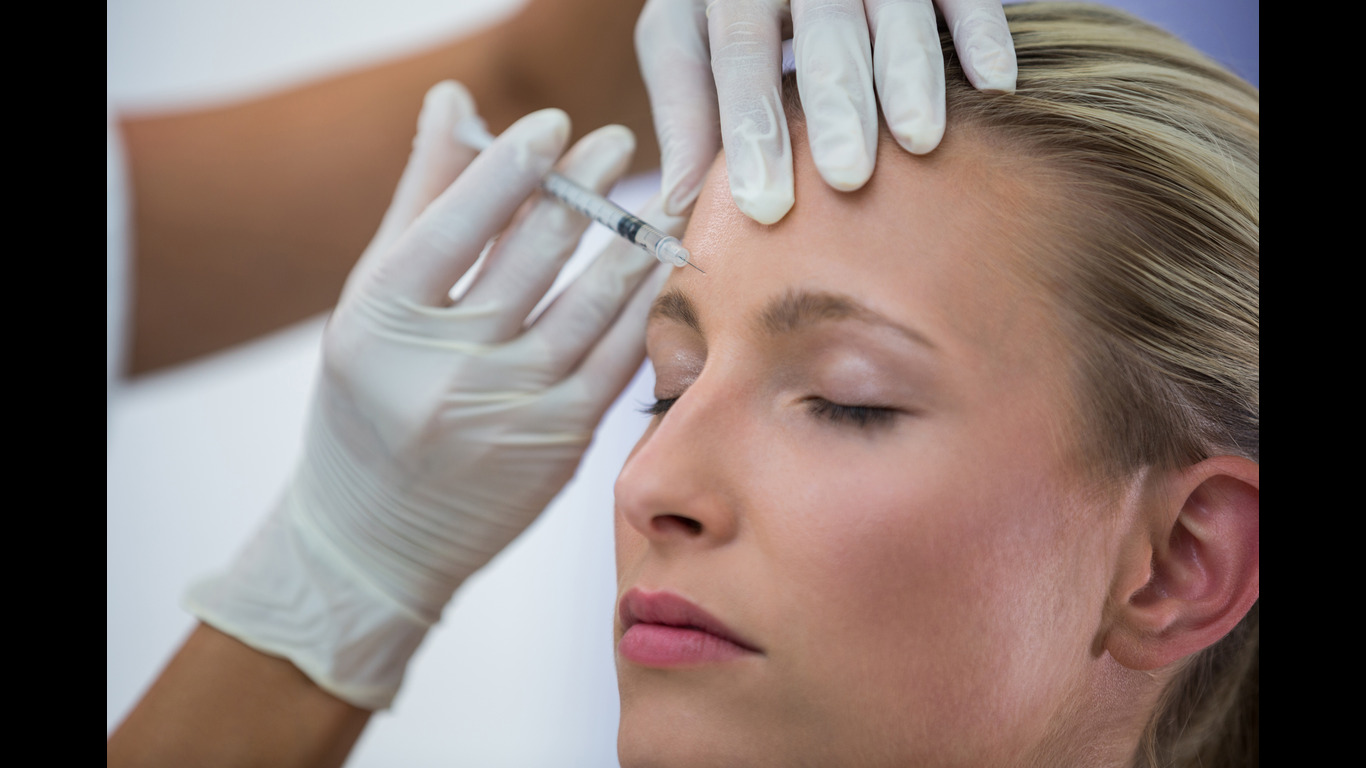
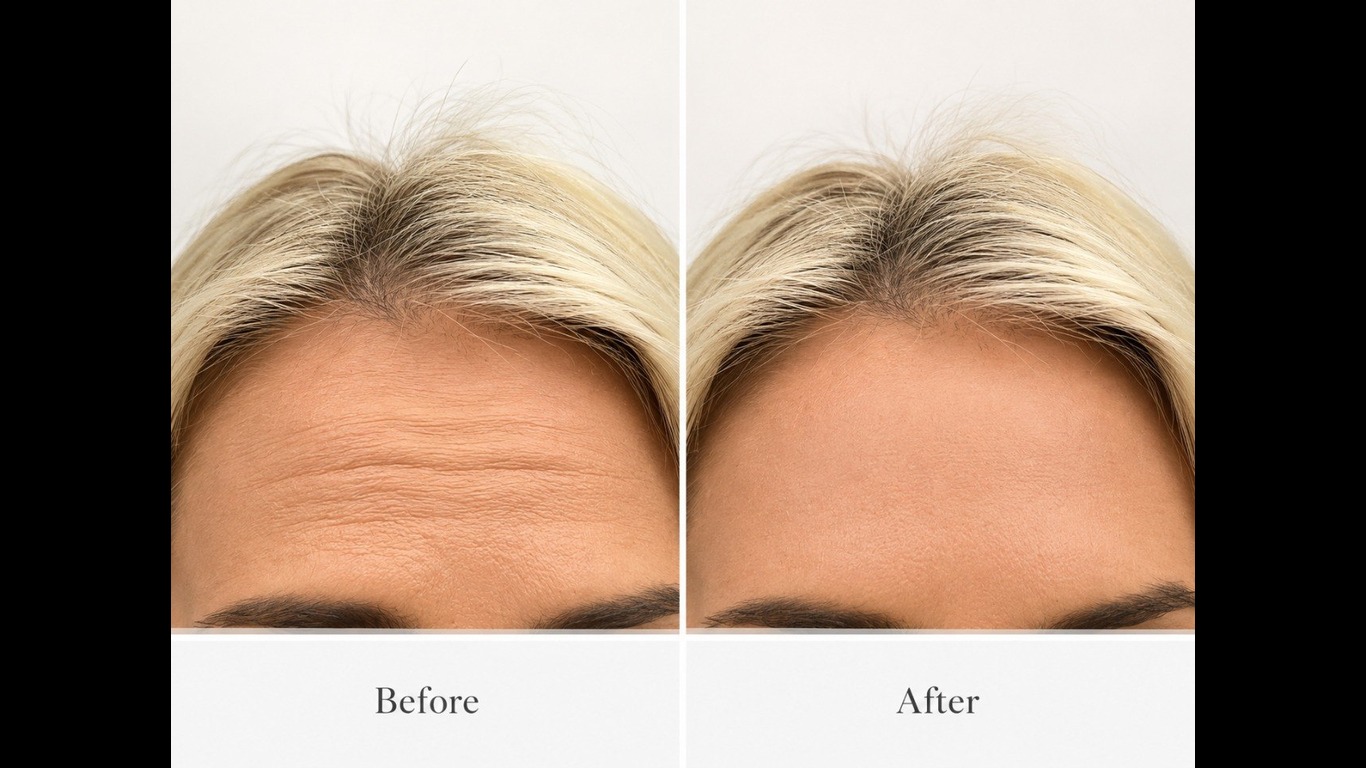
Forehead lines typically respond well to Botox, but this area is often very expressive, so patients sometimes notice movement returning here a bit earlier than around the eyes. In many cases, forehead smoothing lasts around 3–4 months, with some people noticing subtle movement starting at the 8–10 week mark and more obvious lines returning closer to the 3–4 month point.
Because we want to preserve natural brow movement and avoid a heavy or dropped brow, we don’t simply “overdose” the forehead to stretch the timeline. Instead, your injector balances the forehead and frown-line muscles together, which can slightly influence how long things feel frozen versus softly mobile. Over time, as we learn how your forehead responds, we may adjust dosing or timing to keep your results feeling more consistent from visit to visit.
How Long Does Botox Last Around the Eyes?
Around the eyes, especially in the crow’s feet area, Botox commonly lasts about 3–4 months as well. Some patients find this area holds nicely and fades gently, particularly when dosing is balanced and symmetrical, making the gradual return of fine lines less abrupt.
Because the skin here is thinner and very expressive, the goal is usually to soften the crinkling rather than remove every line at rest. With repeat treatments, some people notice that their crow’s feet remain softer for longer periods, but this is not universal. Planning touch-ups every 3–4 months is a practical starting expectation for most patients in Toronto.
Does Botox Wear Off Faster the First Time?
Many first-time patients feel that their initial Botox treatment doesn’t last quite as long as they expected. It’s common to notice results closer to the 3-month mark on the first round, with some even feeling things start to soften a bit sooner. This can be related to conservative starting doses, strong baseline muscle activity, or simply heightened awareness as you’re paying close attention to every change.
After the second or third treatment, many patients feel that their results are more predictable and sometimes slightly longer-lasting because the muscles have been kept relaxed more consistently, reducing their overall strength. This doesn’t mean Botox suddenly lasts forever, but it can feel more stable once we’ve had a chance to fine-tune your dosing and intervals.
How Can You Help Your Botox Last Closer to the Longer End of the Range?
You cannot “force” Botox to last beyond its pharmacologic limits, but there are practical steps that may help you stay closer to the upper end of your personal range.
-
Follow a consistent schedule: Regular, well-timed treatments can help maintain softer muscle activity over time, which some patients find supports longer-lasting smoothness in certain areas.
-
Avoid aggressive rubbing or massage on treated areas right after injections: This is standard post-care and helps ensure the product stays where it should as it settles.
-
Protect your skin from the sun: Good sun protection doesn’t extend the drug’s action, but it protects skin quality so that when movement returns, lines are less etched.
-
Maintain overall skin health: Hydration, medical-grade skincare, and avoiding smoking can improve how your skin looks as Botox wears off, even if they don’t change the intrinsic duration.
During consultation, we’ll also look at whether a slightly adjusted dose or combining Botox with other treatments (such as resurfacing or skincare) could give more stable cosmetic results, without relying solely on squeezing extra weeks from the toxin itself.
How Often Do People in Toronto Typically Repeat Botox?
In a busy Toronto practice, the most common repeat interval for Botox is around every 3–4 months for patients who want to maintain a steady look through the year. Some patients who are less concerned about mild movement may stretch to 4–5 months, particularly if their muscles are not very strong or they prefer a softer effect.
Seasonal planning is also common. Patients sometimes cluster treatments around key times, like summer events or winter holidays, while still respecting safe intervals. Your injector will help you avoid overtreating by watching both how quickly movement returns and how your skin looks as it does.
How Do Botox, Dysport, and Xeomin Compare for Duration?
Botox (onabotulinumtoxinA), Dysport (abobotulinumtoxinA), and Xeomin (incobotulinumtoxinA) are all botulinum toxin type A neuromodulators used for cosmetic wrinkle softening and are available in Canada under Health Canada oversight. For most patients, real-world cosmetic duration is similar, usually in the 3–4 month range for facial lines.
Important points:
-
Units are not interchangeable: Each product has its own potency and dosing rules, and Health Canada specifically advises that they should not be directly converted unit-for-unit.
-
Onset and “feel”: Some people perceive slightly faster onset or a different “feel” in certain products, but overall safety and duration are broadly comparable when properly dosed by a trained injector.
-
Choice of product: In a physician-led clinic, product selection is based on your goals, treatment area, and injector experience, not on a promise that one will last dramatically longer than another.
At Lux Beauty Skin, your injector can discuss Botox, Dysport, and Xeomin with you and select the option that fits your treatment plan, while staying within Canadian medical aesthetics standards.
Signs Your Current Botox Timing Is Right for You
It’s helpful to pay attention to how your face feels and looks in the weeks and months after treatment. You’re probably on the right timing if:
-
You enjoy a smooth but natural look for most of the 3–4 month period, with only mild movement returning near the end.
-
You never feel “over-frozen” or heavy, especially in the forehead and brow area.
-
Your lines at rest remain softer than they were before you started, even as movement gradually returns.
-
You feel ready for a touch-up around the time your next appointment is due, rather than much earlier.
If this sounds like your experience, your current schedule is likely appropriate, and your injector may only need minor adjustments over time.
Signs You May Want to Adjust Your Botox Schedule
On the other hand, it may be time to revisit timing, dose, or treatment areas if:
-
You notice strong movement or deeper lines coming back significantly earlier than 3 months, and it bothers you.
-
One area (for example, your forehead) seems to fade much faster than others, creating an unbalanced look.
-
You feel overtreated, heavy, or “flat” for longer than you’d like, especially in the upper face.
-
Your lifestyle or events (weddings, professional photos, travel) have changed and you’d like to plan around specific dates.
In these cases, we may fine-tune the number of units, adjust which muscles are targeted, or slightly change the timing of visits so your results better match your comfort zone and calendar.
What a Qualified Injector Assesses Before Recommending Timing
Before recommending when to start or repeat Botox, a qualified injector—such as an RN or physician working within a physician-led clinic—looks at more than your age. They will assess:
-
Muscle strength and pattern: How strongly and where you recruit muscles when frowning, raising brows, or smiling.
-
Static versus dynamic lines: Whether lines are only visible with movement or also present at rest.
-
Facial symmetry and brow position: To avoid heaviness or an unnatural arch after treatment.
-
Medical history and medications: To ensure safety under Canadian medical aesthetics standards and within Health Canada-approved uses.
-
Your comfort with movement: Some patients prefer very minimal motion, while others want a softer, more expressive result.
All of this informs not only how much product to use, but how often it makes sense to repeat treatment for you personally.
Safety, Limits, and When Botox May Not Be Right
While Botox and other neuromodulators are widely used and considered safe when administered by trained professionals in appropriate doses, they are still prescription medications and not suitable for everyone. Health Canada emphasizes that botulinum toxin products have specific indications, dosing guidelines, and are not interchangeable.
You may not be an ideal candidate, or you may need to delay treatment, if you:
-
Are pregnant, breastfeeding, or planning pregnancy (as a precaution, most clinics avoid treatment in these circumstances).
-
Have certain neuromuscular disorders or specific medical histories that increase risk.
-
Have a current infection or significant skin issue at the planned injection site.
-
Are expecting permanent results; Botox is always temporary.
A thorough consultation in a physician-led setting allows for a proper medical assessment, discussion of realistic duration, and a review of possible side effects such as temporary bruising, asymmetry, or, less commonly, eyelid or brow heaviness.
Botox Duration and Pricing at Lux Beauty Skin
In Toronto and Richmond Hill, cost planning for Botox is usually done per unit rather than per area. This is important because the number of units you need for a natural result depends on your muscle strength, facial anatomy, and goals, not just a flat package price. At Lux Beauty Skin, our current summer offer includes Botox, Dysport, and Xeomin at $5 per unit, plus an additional 10% discount for treatments over 60 units.
While offers are helpful, the right number of units should be determined during consultation based on your assessment, not price alone. Investing in the correct dose for your face generally leads to more predictable duration and a better overall experience than choosing the lowest unit count just to fit a special.
When to Book (and When Not to Rush)
If you are preparing for a specific event—such as a wedding, important photos, or a major work presentation—it’s wise to book Botox about 2–3 weeks before the date. This allows time for full onset (usually up to 14 days) and for any minor tweaks if needed, while still giving you several months of benefit.
You may want to avoid rushing into treatment if you’re uncertain about your goals, you’ve recently had another injectable treatment and need time to see the full outcome, or you haven’t had a proper consultation to review medical history. Waiting for the right assessment is more important than squeezing in a last-minute appointment, especially for your first time.
FAQ
Using more units than you need does not necessarily mean your Botox will last dramatically longer and can increase the risk of looking overtreated or heavy. A well-planned dose aims to match your muscle strength and desired movement for about a 3–4 month window, not simply maximize units. Over time, consistent but appropriate dosing can help lines stay softer, but there is always a natural limit to duration and safety must come first.
For most healthy adults, repeating Botox every three to four months is a common and accepted schedule in medical aesthetics when performed by a qualified injector. During each visit, your provider will confirm that you’re still a suitable candidate and that your previous treatments have been well tolerated. If you ever feel overly frozen or notice unusual side effects, your injector may adjust the dose or extend the interval between sessions. The goal is maintenance, not overcorrection.
Some patients choose to wait about six months between treatments, especially if they are comfortable with more movement and mild lines returning. In that case, you will likely see most of the Botox effect wear off well before the six-month mark, and lines may gradually return closer to baseline. If your goal is steady smoothness, you’ll usually want a shorter interval, but stretching timelines can be reasonable if you prefer a more flexible, “as-needed” approach.
Differences in duration between you and a friend are very common and usually come down to factors like muscle strength, facial expressions, metabolism, dose, and even how long you’ve each been treating the same areas. Someone with naturally softer expressions may feel their results last longer than a very animated person, even with the same product. Rather than comparing directly, it’s more useful to track your own pattern over a few visits and adjust your plan accordingly.
If you feel movement returning earlier than expected, contact your clinic before deciding on a top-up. In many cases, small touch-ups can be done once the initial treatment has fully settled, usually at least 2 weeks after injection, if it’s safe and appropriate. Your injector will check whether the effect is genuinely fading or simply adjusting and whether a dosage change is warranted. It’s better to be cautious than to layer injections too quickly.